
ITP322: Social Protection for Sustainable Development
The Swedish International Development Cooperation Agency (Sida), Arbetsförmedlingen (the Swedish Public Employment Service) and the Economic Policy Research Institute (EPRI) hereby invite and welcome you to nominate candidates for this International Training Programme on Social Protection for Sustainable Development.
The objective of ITP is a long-term and sustainable contribution to a more inclusive and equal society by improving the function of the social protection systems that tackle poverty, vulnerability, inequality (both gender and economic) and exclusion while strengthening the delivery of inclusive social development, productive employment and equitable economic growth.

Current and Upcoming Programmes
See ongoing programmes and their contents and change programmes. The ITP programme has the objective to increase knowledge and provide participants with opportunities to implement development projects that they have prioritized prioritised together with their organisations.

Upcoming Session: ITP 5
Countries: Ethiopia, Kenya, Uganda, Tanzania, Zambia Applications now open for the ITP 5 cohort. Application Deadline: 28 February 2021
>>Download Brochure

Upcoming Session: ITP 4
Countries: Cambodia, Mozambique, Rwanda, Sudan & Zimbabwe
Applications now open for the ITP 4 cohort.
Application Deadline: 28 February 2021
>>View Details
>>Download Brochure

ITP 2
Countries: Cambodia, Mozambique, Rwanda, Sudan and Zimbabwe
Currently Running: Started Jan 2020
>>View Details

ITP 3
Countries: Zambia, Tanzania, Ethiopia, Uganda and Kenya
Currently Running: Started Jan 2020
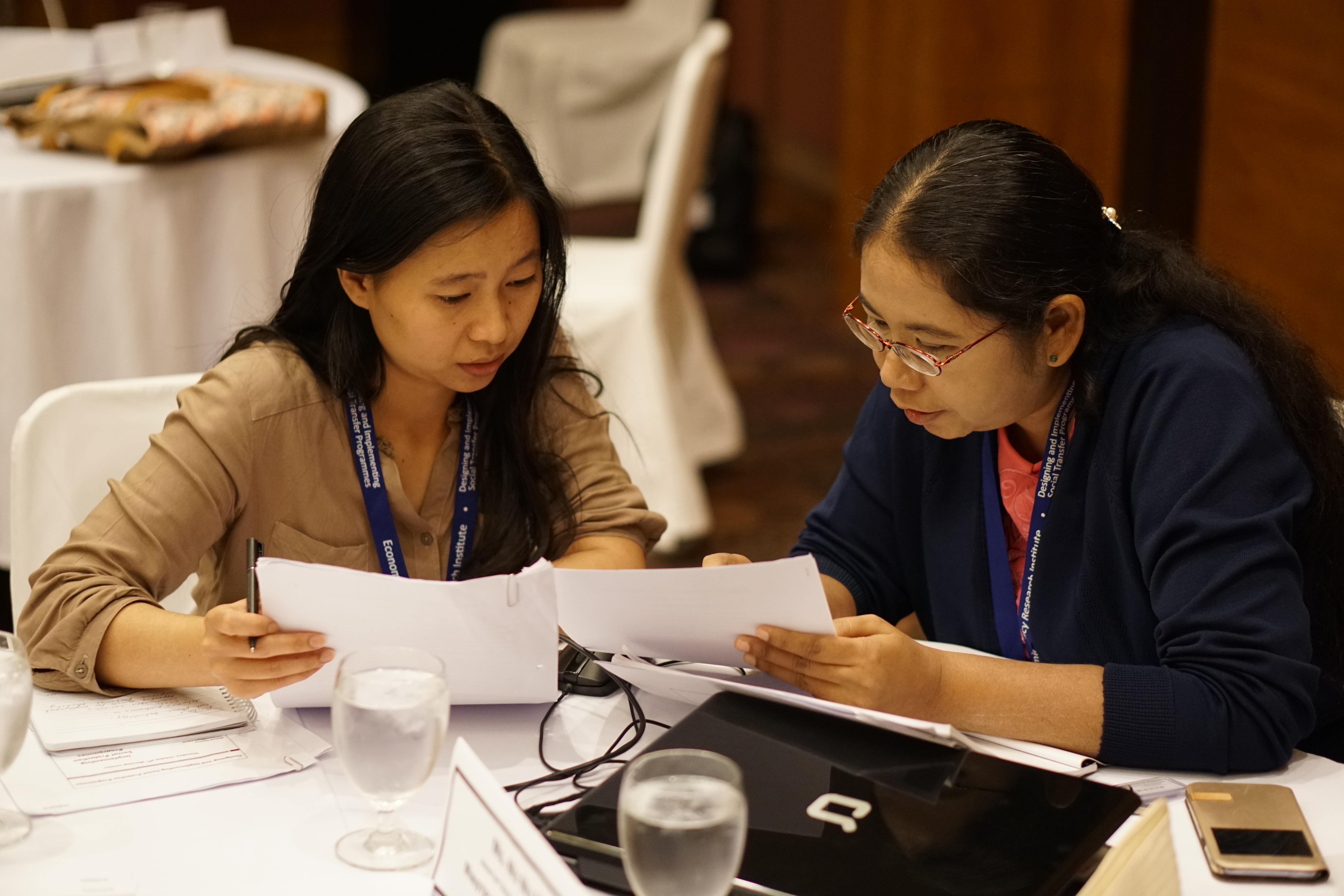
Participants lead change processes
The programme has the objective to increase knowledge and provide participants with opportunities to implement development projects that they have prioritised together with their organisations. The methodology used is based on the assumption that the participants’ organisations wish to carry out changes and are willing to invest their own efforts and resources to achieve these changes.
The ITP specifically aims to reinforce the competence of participating strategic individuals to carry out necessary reforms and policy, programme, and organisational changes within the partner country’s social protection systems while building developmental linkages to other policy sectors. Participants from the public sector and civil society will work in teams drawn from partner countries and learn to identify, design, finance, implement, monitor and evaluate social protection policies, strategies and programmes. The systems approach to change management, which this International Training Programme adopts, will also strengthen cooperation and partnership among key stakeholders, particularly social and economic ministries and agencies, contributing to broader societal changes and strengthening developmental synergies in the participating countries.
Contents
The programme will combine theory with practice to provide participants with knowledge to strengthen a sustainable nation- al social protection system. This programme adopts the Results Based Management (RBM) model as the monitoring strategy that focuses on performance and the achievements of results. RBM shifts the focus from activities and outputs to outcomes and impacts. The core modules of the ITP will include training in seven main areas:
- Rights-based and life cycle frameworks for social protection systems,
- The design and implementation of social protection systems to ensure social inclusion,
- Strengthening developmental impacts by integrating inter-sectoral initiatives to multiply social protection impacts and support the SDGs (“Social Protection Plus”), with a particular focus on decent and productive employment,
- Enabling social protection to promote gender equality,
- Financing and co-financing social protection reforms, expansion and integration, and
- Monitoring and evaluating social protection systems to enable evidence-based
- Social protection responses to the COVID-19 pandemic, and lessons from the global crisis.
In addition, the ITP will innovate specific modules and train- ing components to support the specific change programmes identified by partner country teams and will include three cross-cutting themes – (1) gender equality; (2) good gover-nance, anticorruption and integrity and (3) environment and sustainability.
Programme benefits
- Knowledge and enhanced capacity on social protection systems and their role in tackling poverty, vulnerability and social exclusion while strengthening inclusive social development and decent and productive employment
- Knowledge of the value of building inter-ministerial and inter-agency initiatives as instruments for more effectively integrating social protection with other developmental sectors, including health, education, employment and others.
- To initiate and manage sustainable reform processes building more effective social protection systems
- Capacity and knowledge to plan and implement a project for change
The programme will provide the participant with an in-depth understanding of:
- the role of comprehensive social protection systems in promoting social and economic development,
- how integrating social protection instruments with developmental interventions in health, education, livelihoods and other sectors can tackle complex problems and achieve comprehensive outcomes,
- knowledge of policies and tools for more effectively designing and integrating social protection policies, programmes and systems,
- the potential of comprehensive social protection systems to support decent and productive employment,
- cross-cutting perspectives, including gender equality, anti-corruption and environmental/climate issues,
- the ability to identify and analyse challenges and problems in the social protection system in the home country and to suggest corrective measures,
- the ability to initiate, organise and implement a sustainable project for change based on development priorities,
- an established network for exchanging experiences and support between participants
Organisers

The Swedish International Development Cooperation Agency (Sida) offers, as part of its bilateral development assistance, capacity development activities in areas of strategic importance to the social, environmental and economic development in the participating countries. The purpose of the Advanced International Training Programmes is to provide resources and develop knowledge, skills and expertise to organisations with strong legitimacy in relation to target groups, democracy practices etc. in areas given priority in Swedish development cooperation, are based on identified priorities and needs and in which Swedish expertise is in demand.

Arbetsförmedlingen, the Swedish Public Employment Service, contributes to a well- functioning labour market in Sweden through facilitating more effective matching of vacancies and job seekers, prioritising those who are furthest removed from the labour market and helping to permanently increase employment in the long term.
Arbetsförmedlingen has a long tradition of international cooperation through provision of support to government agencies and organisations in countries with development needs in the labour markets, particularly with regard to active labour market policies, labour market institutions and social dialogue, result-based management information systems, labour market and forecasting and analysis and methods to promote employment to marginalised and disadvantaged groups.
The Economic Policy Research Institute (EPRI), a global organisation based in Cape Town, South Africa, works to better enable governments, their development partners and civil society institutions to design, implement, monitor and evaluate strategies, policies and programmes that support inclusive social development and equitable economic growth. EPRI specialises in research, capacity building and policy advisory services strengthening comprehensive and integrated social protection systems.
EPRI is a not-for-profit institution incorporated under section 21 of South Africa’s Companies Act. A globally top-ranked research institute, EPRI brings twenty-six years of experience in best-practice solutions to strengthening social protection systems and integrating them with effective and equitable policies for sustainable development, decent work and equitable economic growth.
Contact Us
Economic Policy Research Institute (EPRI)
3rd Floor Sunclare Building, 21 Dreyer Street,
Claremont, Cape Town 7708,
Republic of South Africa
Telephone: +27 21 813 97 00
www.epri.org.za
Contact: Dr Michael Samson Programme Convenor
E-mail: ITP@epri.org.za
Phone: +27 82 550 40 55
Arbetsförmedlingen – Swedish Public Employment Service,
Director General’s Office/Unit of International Affairs
SE-113 99 Stockholm, Sweden
Phone: +46 771 60 00 00
Fax +46 8 508 801 75
www.arbetsformedlingen.se
Contact: Ms Julia Kusoffsky Project Coordinator
E-mail: julia.kusoffsky@arbetsformedlingen.se
Phone: +46 (0)10-486 59 16